Digital accessibility: a legal framework still largely ignored by 20 Walloon municipalities
Twenty Walloon municipalities have refused to sign Esenca’s Municipal Charter for the Inclusion of People with Disabilities. We checked the accessibility of their homepages.
Accessibility of websites and apps for all public services has been a legal requirement since June 2020.
Beyond this requirement, Esenca is calling on local authorities to make a public commitment to the inclusion of people with disabilities by signing a charter (FR). However, 20 local authorities still refuse to do so (FR).
Our analysis carried out in 2024 (FR) shows that neither signing the charter nor obtaining the Handycity label automatically guarantees the actual accessibility of websites and apps. This remains true despite commitment no. 4 of the charter, “multifaceted accessibility”, which explicitly mentions digital accessibility.
Using the benchmark tool Axe-core, we have this time analysed the homepages of the 20 reluctant municipalities. Despite some technical progress on the most recent websites, the regulatory aspect remains the weak point of their digital presence.
Technical progress: a two-speed dynamic
Our rapid audit shows that website architecture strongly influences access to information.
For 12 municipalities (Cerfontaine, Erezée, Ferrières, Gerpinnes, Grâce-Hollogne, Merbes-le-Château, Philippeville, Quévy, Theux, Thimister-Clermont, Seraing), the use of recent, standardised templates is effective. With only one or two automatically detectable errors, these sites have a solid technical foundation.
For the other 8 (Aubel, Burg Reuland, Frasnes-Lez-Anvaing, Gouvy, Herbeumont, Jurbise, Ouffet, Walhain), the older websites contain errors that need to be corrected urgently to ensure equitable access for all citizens.
The sticking point: a lack of administrative compliance
Beyond the technical aspects, we carried out a simplified audit of the 12 best-performing sites using the method of the Walloon supervisory authority Equal. Keyboard navigation is generally very good, but compliance with transparency obligations is not guaranteed.
Indeed the accessibility statement, although mandatory, remains largely incomplete in all cases. To be compliant, it must specify:
- The level of compliance achieved.
- The date of the last audit, which must be recent.
- A list of accessibility issues still present.
- The contact details of a contact person in the event of an official complaint.
Yet none of these statements contains these four essential elements.
A necessary reminder of legal deadlines
Digital accessibility is not a “bonus” that can be postponed. The standards set out in the European Directive have been required for over three years.
We therefore urge the 12 local authorities with a recent website to rectify their administrative situation by publishing a compliant accessibility statement. For the other eight, a technical update is required to meet current standards.
By signing the Esenca charter and bringing their platforms into compliance with the law, these local authorities would demonstrate that digital inclusion is a genuine priority in their governance.
Latest articles
-
Help! I'm getting criticism about my website's accessibility. Now what?
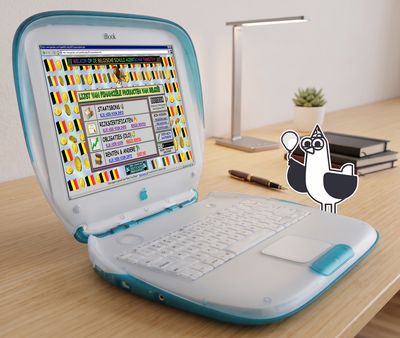
In late August 2026, usability experts said that the website of the Federal Agency of the Debt, where citizens can buy government bonds, is a textbook example of how not to build a website. That criticism wasn't new: three years earlier, the same editorial team had already said the site was outdated. The Agency promised at the time to work on it. Since then, nothing has changed, and there aren't even plans anymore, because the budget is lacking.
-
Bingo! Do you recognize these excuses about accessibility?
"Someone who is blind doesn't need our website anyway, right?" Anyone who has ever worked on a web project has definitely heard this sentence (or a variant of it) before. Usually in a meeting, usually right at the moment accessibility finally made it onto the agenda.

Popular articles
- Help! I'm getting criticism about my website's accessibility. Now what?
- Accessibility Statement Generator
- Tooltips that work for everyone
- Star raters are more challenging to make accessible than you might think
- Fixing digital accessibility issues with the press of a button: too good to be true?
- Combined 50 years of accessibility expertise: an expert interview
How can we help your organisation?
-
Mail your question : info@elevenways.be -
Call us : +32 (0)78 079 111